
NEWS
Data is empty
Best Office Chairs For People With Lower Back Pain
For millions of professionals tethered to desks, lower back pain isn't an occasional nuisance—it's a persistent companion that shadows every workday. What many fail to recognize is that the very swivel desk chair promising comfort may be silently accelerating spinal fatigue through biomechanical compromises invisible to the untrained eye. Unlike acute injuries with clear origins, sitting induced lumbar discomfort develops insidiously: subtle pelvic tilting, gradual disc compression, and cumulative muscular strain converging into chronic pain patterns that resist conventional remedies. Yet within this challenge lies an opportunity—modern ergonomic science has decoded precisely how seating geometry interacts with spinal physiology, transforming chair selection from guesswork into an evidence based strategy for preserving lumbar integrity.
Chapter 1: Decoding the Biomechanics Behind Sitting-Induced Lumbar Strain
When we settle into a chair for extended periods, FSGROWING's lumbar spine undergoes subtle yet significant transformations that directly impact comfort and long-term spinal health. The human lumbar region naturally maintains a gentle inward curve called lordosis—a critical architectural feature that distributes compressive forces evenly across intervertebral discs. However, conventional seating often encourages posterior pelvic tilt, where the pelvis rotates backward and flattens this essential curve, transferring excessive load onto passive structures like ligaments and discs rather than engaging supportive musculature.
Research indicates that prolonged sitting in poorly designed chairs increases intradiscal pressure by up to 40% compared to standing positions, creating a perfect storm for disc degeneration and muscular fatigue.
This mechanical stress concentrates precisely where many office workers experience their most persistent discomfort: the L4-L5 and L5-S1 segments. Understanding this biomechanical reality transforms chair selection from a comfort preference into a strategic health decision. The most effective seating solutions don't merely cushion the body—they actively preserve pelvic neutrality and lumbar lordosis through intelligently engineered support systems that work with, rather than against, spinal anatomy.
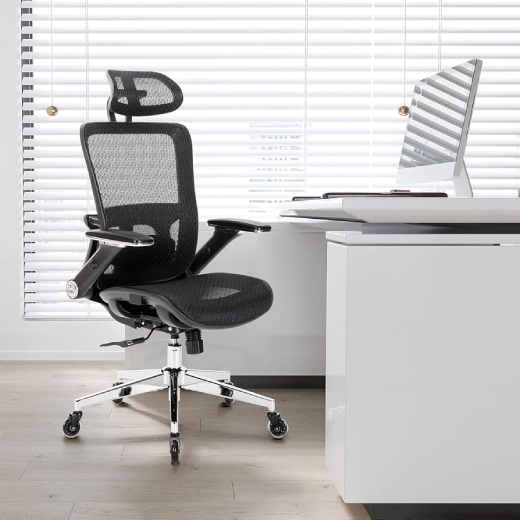
Chapter 2: Lumbar Support Mechanisms and Mesh Technology: Engineering Relief at the Source
Not all lumbar support functions identically beneath the surface. Passive systems—typically fixed cushions or molded contours—provide consistent pressure but cannot adapt to dynamic postural shifts throughout the workday. Active lumbar mechanisms, conversely, employ adjustable depth or height controls that allow users to precisely position support at their unique lordotic apex, maintaining the spine's natural curvature whether leaning forward to type or reclining during contemplation.
This adjustability proves crucial because lumbar positioning varies significantly between individuals based on torso length, pelvic structure, and existing postural patterns.
Mesh back technology has emerged as a particularly effective medium for delivering this support. Unlike rigid materials that create pressure points, high tension woven mesh distributes load across its entire surface while maintaining structural resilience. The material's inherent flexibility allows subtle conformity to spinal contours without collapsing under body weight—a balance rigid plastics or overly soft padding often fail to achieve.
Furthermore, mesh's breathability prevents heat accumulation that triggers muscle tension—a frequently overlooked contributor to lower back fatigue. Some manufacturers have refined this approach by integrating zoned tension within the mesh weave itself, creating areas of firmer resistance precisely where lumbar support is needed most while maintaining flexibility elsewhere. This engineering nuance exemplifies how material science intersects with ergonomic principles to address lower back discomfort at its mechanical source rather than merely masking symptoms.
Chapter 3: The Mobility Factor: How Swivel Functionality Protects Your Lumbar Spine
While lumbar support rightfully dominates conversations about back-friendly seating, the swivel mechanism represents an equally vital—yet frequently underestimated—component in preventing lower back strain. A quality swivel desk chair enables 360-degree rotation with minimal resistance, allowing users to access different workspace zones without twisting their spine laterally.
This distinction proves critical: when forced to rotate their torso while hips remain fixed (as occurs with non-swiveling chairs), individuals generate significant shear forces across lumbar facet joints and intervertebral discs—forces directly implicated in disc herniation and facet syndrome.
The biomechanical advantage extends beyond pure rotation. Smooth-swiveling chairs encourage micro-movements throughout the day—subtle weight shifts and positional adjustments that prevent static loading on any single spinal structure. These continuous micro adjustments stimulate circulation to spinal tissues and prevent the muscular fatigue that often triggers protective guarding and subsequent pain cycles. When evaluating swivel office chair options, resistance quality matters more than rotation range itself; a chair requiring excessive force to turn defeats its ergonomic purpose by creating new strain patterns.
The ideal mechanism operates with fluid consistency across its entire range, supported by a robust central column and high quality bearing system that maintains performance through years of daily use—unlike budget alternatives where swivel mechanisms often degrade within months, compromising both mobility and stability.
Chapter 4: Beyond Initial Comfort: Evaluating Long Term Value and Material Integrity
Initial comfort can prove deceptive when selecting seating for chronic lower back issues. Many users discover this reality after purchasing budget-friendly options like basic officeworks chairs, only to find structural components degrading within 12-24 months—particularly gas lifts failing, mesh stretching permanently, or lumbar mechanisms losing adjustment precision.
This deterioration creates a dangerous scenario: as support systems degrade, users unconsciously compensate through muscular effort, accelerating fatigue and potentially worsening existing conditions. True value emerges not from purchase price alone but from sustained performance of critical ergonomic features throughout the chair's lifespan.
Material selection profoundly influences this longevity equation. High-quality mesh maintains tension integrity through thousands of compression cycles, whereas inferior weaves gradually lose resilience, creating sagging zones that compromise lumbar support geometry.
Similarly, the chassis construction—particularly at stress concentration points like the seat-to-back junction—determines whether a chair maintains its ergonomic profile through years of use. Some manufacturers address this through strategic reinforcement in high stress zones while preserving flexibility elsewhere, creating chairs that balance durability with adaptive support. When researching options, prioritize manufacturers providing detailed specifications about mesh tensile strength, frame materials, and warranty coverage specifically for mechanical components rather than just cosmetic elements. This scrutiny separates seating solutions that genuinely support spinal health through years of use from those offering merely temporary comfort before contributing to the very problems they promised to solve.
Frequently Asked Questions
What distinguishes an effective swivel office chair for lower back pain from standard rotating chairs?
Effective swivel chairs for lumbar support maintain consistent rotational smoothness without wobble or resistance spikes, enabling effortless repositioning that prevents torsional strain on spinal structures. The mechanism should operate silently with fluid motion across its entire range, supported by a reinforced central column that prevents lateral flexing during rotation.
Are officeworks chairs suitable for individuals with diagnosed lower back conditions?
While Officeworks offers various seating options, many budget models lack the precise adjustability and material durability required for chronic lower back issues. Users with existing conditions typically require chairs featuring independently adjustable lumbar depth/height, seat depth customization, and robust construction that maintains support integrity beyond two years—specifications often absent in entry-level officeworks chairs.
How does mesh back technology specifically benefit lumbar support compared to padded alternatives?
Mesh distributes pressure evenly across its entire surface rather than creating isolated pressure points, while its slight give allows dynamic conformity to spinal contours during movement. This continuous adaptive support maintains lumbar lordosis through postural transitions, whereas rigid padded backs often create gaps during recline or forward lean, compromising support precisely when needed most.
Can a swivel desk chair alone resolve chronic lower back pain?
No single intervention resolves complex spinal conditions. An ergonomically optimized swivel chair functions as one component within a comprehensive strategy including regular movement breaks (every 30-45 minutes), core strengthening exercises, proper workstation height alignment, and professional medical guidance when pain persists beyond two weeks.
What maintenance practices extend the functional lifespan of lumbar support mechanisms?
Regular cleaning of adjustment mechanisms prevents dust accumulation that impedes smooth operation. Periodically checking all adjustment levers for proper tension and ensuring the chair base remains free of debris preserves swivel functionality. For mesh-backed designs, avoiding direct sunlight exposure prevents premature material degradation that compromises both support geometry and breathability over time.
How To Properly Adjust An Office Chair For Optimal Comfort?
Where To Buy Adjustable Office Chairs Online With Free Shipping
Latest Blog