
NEWS
Data is empty
Ergonomic Chair Parts List: Guide to Ergonomic Office Chair Components and Seat Design
An ergonomic office chair is not defined by one feature such as a headrest, lumbar support, or adjustable armrest. Its performance comes from the interaction of multiple components: the seat structure, backrest, mechanism, gas lift, chair base, casters, armrests, headrest, and supporting hardware.
1. What Parts Are Included in an Ergonomic Office Chair Parts List?
A conventional office chair parts list normally starts with the visible components: seat, backrest, armrests, headrest, base, casters, and gas lift. However, an ergonomic office chair parts structure is more complex because several components determine how the chair moves and adapts to different users.
What are the main structural components of an ergonomic office chair?
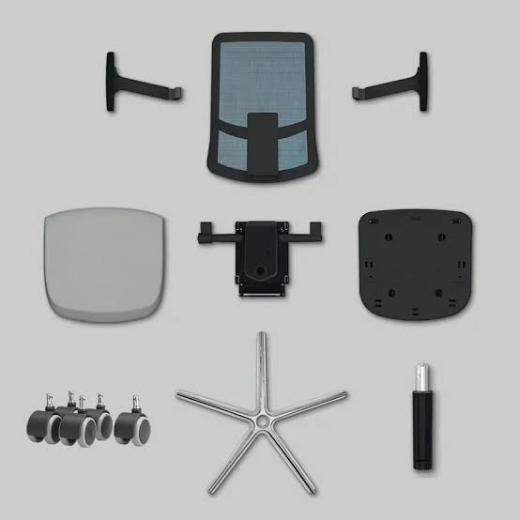
The core components generally include:
Seat shell or seat pan — provides the structural foundation for the seat assembly.
Seat cushion or upholstery — controls pressure distribution and sitting comfort.
Backrest — supports the trunk and works with lumbar-support components.
Lumbar support — provides localized support and may offer height, depth, tension, or angle adjustment.
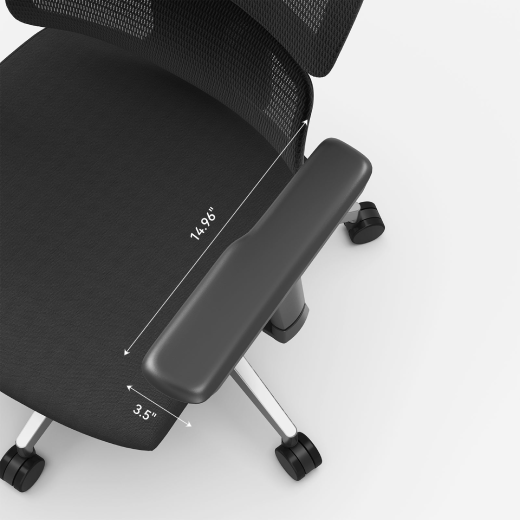
Armrests — support the forearms and help position the shoulders relative to the working surface.
Headrest — primarily supports the head and neck during reclined or relaxed postures.
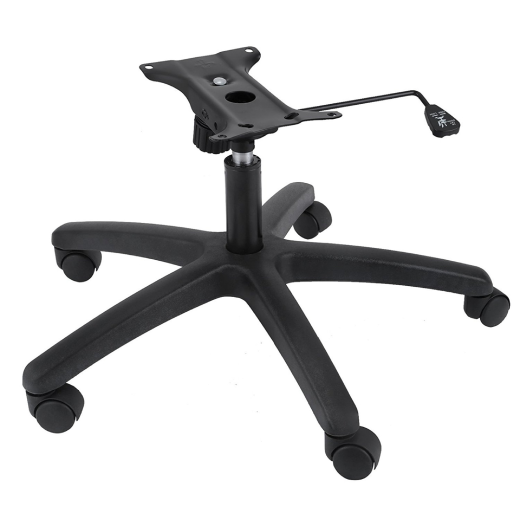
Mechanism plate — connects the seat assembly to the gas lift and controls functions such as tilt, recline, locking, and sometimes seat-angle adjustment.
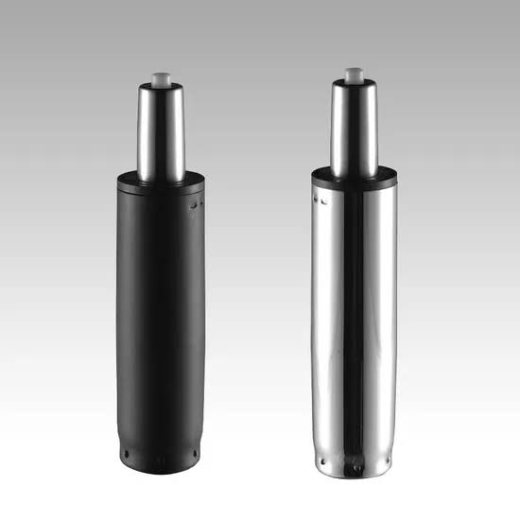
Gas lift cylinder — provides seat-height adjustment and enables vertical positioning.
Chair base — distributes the load from the gas lift to the floor.
Casters — provide mobility while transferring dynamic loads between the chair and floor.
The important point is that these parts should not be considered isolated products.
The mechanism, for example, determines how the seat and backrest move. The gas lift determines the usable height range. The seat shell establishes the foundation for seat geometry. The casters influence mobility and floor interaction. An ergonomic chair can therefore have excellent individual components but still perform poorly if those components are mismatched.
This is why an ergonomic chair parts list should be viewed as a functional system rather than a simple inventory.
Which ergonomic chair parts affect comfort most directly?
The seat, backrest, lumbar support, and armrests normally have the most obvious effect on perceived comfort, but comfort is not the same as ergonomic performance.
A thick cushion may initially feel comfortable while creating excessive heat or insufficient support after prolonged use. Similarly, aggressive lumbar support may appear technically advanced but become uncomfortable if its position does not correspond to the user's body.

2. How Does Ergonomic Seat Design Depend on Individual Chair Components?
The phrase ergonomic seat design is sometimes used to describe the shape of the cushion alone. In professional chair development, that interpretation is too narrow.
The seat is a load-bearing interface between the user and the chair structure. Its geometry affects pelvic positioning, thigh support, pressure distribution, working posture, and the effectiveness of other adjustment functions.
How do seat shell and seat cushion work together in ergonomic seat design?
The seat shell provides structural rigidity, while the cushion and upholstery create the immediate contact surface.
A well-designed seat needs a controlled balance between support and compliance. Excessively soft cushioning can allow the pelvis to sink and reduce positional stability. Excessively rigid surfaces can increase localized pressure.
Seat depth is equally important. If the seat is too deep for a user, the front edge may interfere with the lower legs while making it difficult to maintain appropriate back contact. If it is too shallow, the thighs may receive insufficient support.
Why are ergonomic chair mechanisms critical to the overall sitting experience?
The mechanism is often hidden underneath the seat, but it is one of the most technically important components.
It determines how the chair responds when the user changes posture. Basic mechanisms may allow simple tilt, while more sophisticated designs coordinate seat and backrest movement, provide multiple locking positions, adjust tilt tension, or allow additional seat-angle functions.
The key engineering issue is controlled movement.
An ergonomic chair should not merely recline. It should provide predictable resistance, stable locking, repeatable adjustment, and sufficient structural durability under repeated loading.
This is also why mechanism plates should be evaluated according to their material construction, mounting geometry, load requirements, adjustment system, and compatibility with the seat shell and gas lift—not merely by external appearance.
What role does the gas lift cylinder play in ergonomic office chair parts?
The gas lift connects two functional zones: the upper chair assembly and the five-star base.
Its primary purpose is vertical adjustment, but its influence extends to ergonomics because seat height determines the relationship between the user's feet, knees, hips, desk, and arm position.
A gas lift therefore needs to be compatible with the chair's intended height range, mechanism interface, base configuration, load requirements, and application environment.
3. How Should Buyers Evaluate Ergonomic Chair Parts Beyond the Product Name?
Searching for an ergonomic chair parts list is often the first step. The more difficult task is determining whether a component is actually suitable for a particular chair platform.
Are adjustable armrests automatically better ergonomic office chair parts?
Not necessarily.
Armrest adjustment can include vertical movement, width adjustment, forward/backward movement, and pivot or angle adjustment. More adjustment directions can increase the ability to accommodate different users, but additional movement also creates more interfaces, tolerances, locking points, and potential sources of instability.
A poorly engineered multi-directional armrest can wobble or lose its position during use.
The correct evaluation should therefore include adjustment range, locking stability, pad material, mounting structure, load resistance, repeatability, and compatibility with the seat assembly.
The same principle applies to headrests and lumbar-support systems.
What should manufacturers check when sourcing ergonomic office chair components?
For OEM and wholesale applications, component procurement should move beyond "Does this part fit?"
A better checklist includes:
Dimensional compatibility: mounting holes, interfaces, envelope dimensions, and tolerances must correspond with the chair platform.
Functional compatibility: the component must work with the mechanism, seat shell, backrest, or other connected parts.
Material consistency: plastics, metals, PU pads, mesh materials, and structural elements should match the intended performance level.
Load and fatigue requirements: components repeatedly exposed to movement should be assessed for long-term durability rather than only static strength.
Assembly efficiency: inconsistent dimensions can increase production time, rework, and quality-control costs.
Supply consistency: OEM buyers need stable specifications across batches, not simply a sample that performs well.
These considerations explain why component suppliers with coordinated manufacturing capabilities can be valuable to chair developers.
For example, FSGROWING operates specialized workshops that work together to produce different office chair components, including casters, chair bases, gas lift cylinders, mechanism plates, seat shells, backrests, headrests, armrests, and more. This broader component structure is relevant when a manufacturer needs to coordinate several parts within one chair architecture rather than source every component independently.
Why is compatibility more important than buying the cheapest chair part?
A low unit price can become expensive when a component creates assembly problems or premature failures elsewhere.
Consider a mechanism plate that technically matches the mounting pattern but does not provide the required movement characteristics. Or consider casters that fit the base but perform poorly on the intended flooring. In both cases, the apparent component saving may be outweighed by warranty claims, production modifications, or user complaints.
4. What Are the Most Important Questions About Ergonomic Chair Parts?
Which ergonomic chair parts are most important for long hours of sitting?
There is no single universal component. Seat geometry, backrest support, lumbar adjustment, armrest positioning, mechanism behavior, and seat height work together.
For long-duration applications, the ability to adjust the chair to different body dimensions is often more valuable than adding isolated premium features.
Is an ergonomic chair with more adjustable parts always better?
No.
More adjustment points increase potential customization, but they also introduce additional mechanical interfaces. A high-quality chair should provide useful adjustment ranges with stable positioning rather than maximizing the number of adjustment directions.
For manufacturers, functional adjustment is more important than feature counting.
Why does an ergonomic chair feel uncomfortable even when all the parts are high quality?
Component quality and system compatibility are different issues.
A high-quality armrest cannot compensate for an incorrectly positioned seat. A sophisticated lumbar-support module cannot compensate for unsuitable backrest geometry. A strong gas lift cannot correct poor seat height selection.
Ergonomic performance is an integrated-system problem.
What should I request from an ergonomic chair parts supplier before placing an order?
At minimum, clarify dimensional drawings, mounting interfaces, materials, adjustment functions, applicable chair models, load requirements, available customization, quality-control procedures, packaging, and sample approval procedures.
For customized projects, request technical drawings or samples before moving directly to mass production.
Which parts are most difficult to customize?
Seat shells, backrests, mechanisms, and armrest structures can require substantial coordination because their dimensions and interfaces affect multiple components.
Customization should therefore begin with the complete chair architecture rather than modifying an individual component in isolation.
Can individual ergonomic chair parts improve an existing office chair?
Sometimes.
Replacing casters, armrests, gas lifts, or other compatible components can extend or modify a chair's functionality. However, replacement is only practical when the interfaces, dimensions, load requirements, and mechanisms are compatible.
A replacement part should be selected based on engineering compatibility rather than visual similarity.
What is the difference between an ergonomic chair parts list and a replacement parts list?
An ergonomic chair parts list describes the components that make up the chair system. A replacement parts list is application-specific and identifies which components can be removed and replaced while maintaining compatibility.
For procurement teams, this distinction matters because a component can be technically correct as a standalone product but unsuitable as a replacement for a particular chair model.
If you are developing an office chair platform or reviewing an ergonomic chair parts specification, exploring component categories together can be more useful than evaluating isolated parts. FSGROWING's office chair component range provides a starting point for reviewing different component solutions across chair structures and applications.
How Does a Tilt Mechanism Work?
Adjustable Armrest Solutions: How to Choose the Right Office Chair Armrest for OEM Projects
Latest Blog