
NEWS
Data is empty
Global Chair Parts Market in 2026
The chair parts market has shifted from a cost focused procurement exercise to a strategic value driver. As hybrid work models demand chairs that support six or more postural transitions daily, every caster, gas lift, and tilt mechanism must meet elevated performance benchmarks. Industry forecasts project the furniture hardware segment will expand at 9.9% CAGR through 2033, but this growth reflects qualitative upgrades—not just volume increases. Professionals evaluating suppliers now prioritize technical reliability, regulatory readiness, and lifecycle sustainability over unit price alone.
According to this analysis, how can FSGROWING balance customization agility with production efficiency? Let's begin.
How do emerging regulations like the EU Digital Product Passport impact sourcing decisions?
Compliance complexity has become a core procurement criterion across the global chair industry. The EU's Digital Product Passport requires manufacturers to document material origins, carbon footprint, and end-of-life recyclability for major components. This isn't administrative overhead—it's a strategic filter separating suppliers with mature traceability systems from those operating opaquely. Buyers navigating the chair parts market must verify partners can deliver batch-level material certificates and third party test reports without delaying time-to-market. Forward-thinking manufacturers like FSGROWING have integrated blockchain enabled tracking and BIFMA aligned testing protocols to meet these evolving demands proactively.
How Do Material Innovations and Engineering Standards Reshape the Furniture Hardware Market?
What makes advanced composites superior to traditional materials in premium chair components?
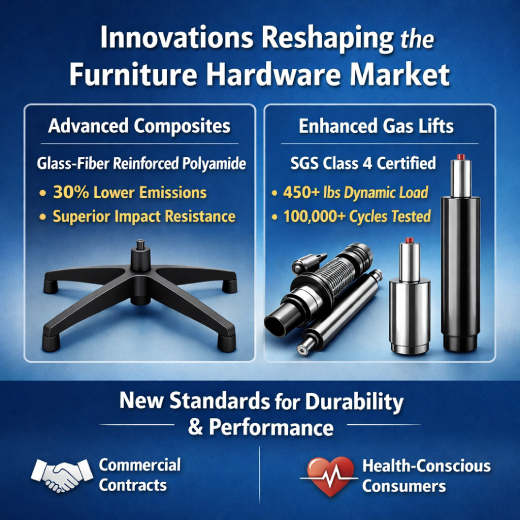
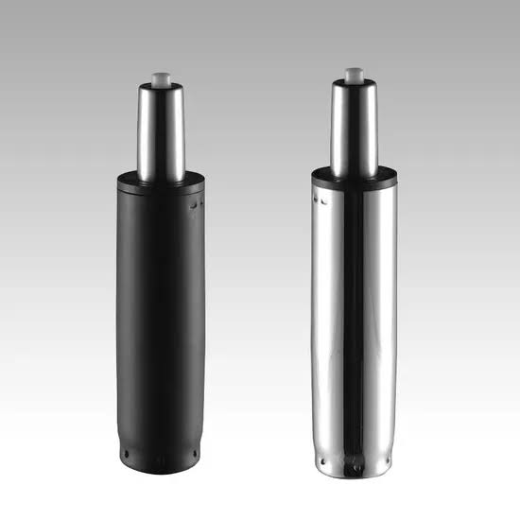
Material science is redefining performance baselines across the furniture hardware market. Glass-fiber reinforced polyamide now replaces die-cast aluminum in many premium bases, delivering 30% lower production emissions while improving impact resistance and design flexibility. Gas lifts have evolved from basic pneumatic tubes to SGS Class-4 certified safety systems capable of supporting dynamic loads over 450 lbs with consistent smoothness across 100,000+ cycles. These upgrades aren't premium add-ons—they're becoming minimum requirements for commercial contracts and health-conscious consumer segments seeking long-term durability.
Why does integrated manufacturing matter for component consistency and customization agility?
Specialized expertise translates engineering concepts into reliable, scalable products. Manufacturers like FSGROWING, operating from Foshan's furniture hub, maintain coordinated workshops for plastic injection molding, metal stamping, and precision assembly. This vertical integration ensures dimensional consistency across casters, bases, gas lifts, and structural frames—reducing assembly-line friction for OEM partners. It also enables rapid prototyping for custom applications, particularly valuable for plywood components and ergonomic backrest geometries where tolerance directly affects manufacturing efficiency and end-user comfort. For professionals exploring technical specifications, resources like https://www.fsgoin.com offer engineering focused insights without sales pressure.
Which Supply Chain Challenges Are Redefining Sourcing Strategies in the Global Chair Industry?
How can buyers balance cost transparency, delivery reliability, and quality assurance simultaneously?
Supply chain volatility has ended the era of optimizing solely for lowest unit price. Smart procurement now calculates Total Landed Cost—incorporating tariffs, insurance, compliance documentation, and potential rework expenses—to reveal true economics. Delivery reliability requires real-time production capacity data and contingency planning for geopolitical or logistical disruptions. Quality assurance means moving beyond final inspection to embedded process controls, with ISO 9001 certification and batch-level testing as standard expectations. The chair parts market rewards partners who can deliver on all three dimensions without compromise.
What verification protocols actually work against counterfeit or substandard components?
The furniture hardware market faces persistent quality fraud risks that demand layered verification. Effective mitigation includes cross-referencing BSCI/SEDEX audit IDs on official platforms, requesting raw material invoices for critical components, and conducting unannounced third-party factory inspections. Reputable suppliers welcome this scrutiny because consistent quality is their competitive moat. Buyers who skip these steps risk field failures triggering warranty claims, regulatory penalties, and lasting brand damage—costs that far exceed any short-term savings from dubious sourcing. Transparency isn't optional; it's the foundation of trust in the global chair industry.
What Critical Questions Should Professionals Ask When Evaluating Chair Parts Suppliers?
How do you assess a supplier's innovation capacity beyond basic manufacturing capability?
Technical partnership potential matters more than transactional capacity. Ask whether the supplier uses digital twin simulation for mechanism prototyping—this accelerates iteration cycles when adapting to regional ergonomic preferences or material constraints. Inquire about R&D investment ratios and patent portfolios in core technologies like gas lift sealing or caster noise reduction. Suppliers who proactively share failure analytics and improvement recommendations become strategic allies, not just order fulfillers. This collaborative mindset is increasingly valuable as the furniture hardware market rewards adaptability over static efficiency.
What indicators reveal long-term alignment with your brand's sustainability and compliance roadmap?
Future proofing requires evaluating suppliers on trajectory, not just current capability. Do they invest in workforce training for advanced manufacturing techniques? Are they modernizing equipment to support tighter tolerances and cleaner production? Do their sustainability initiatives align with your five-year ESG goals? The chair parts market increasingly rewards partners who anticipate regulatory shifts and technological evolution. By prioritizing technical expertise, documentation rigor, and collaborative innovation, professionals transform supply chain decisions into durable competitive advantage.
Industry Pain Points FAQ: Chair Parts Market
How can I verify gas lift safety certification without factory visits?
Request the SGS or BIFMA report number and validate it directly through the certifier's official portal. Reputable manufacturers provide this instantly. Beware of suppliers who hesitate or offer only summarized claims without verifiable documentation.
What's the real total cost difference between commodity and premium casters?
Unit price may differ 2-3x, but premium casters with floor-specific compounds and noise-reducing coatings typically deliver 40% lower three-year ownership cost by reducing floor damage claims, user complaints, and replacement frequency.
Are small-batch custom orders economically viable for specialized applications?
Yes, with partners who maintain flexible tooling libraries. Manufacturers leveraging modular mold systems can significantly reduce non-recurring engineering costs for custom plywood components or specialized backrest geometries.
How do I future-proof component specifications against evolving regulatory requirements?
Prioritize suppliers who actively participate in standards committees like BIFMA. They receive early alerts on revision cycles and can adapt designs proactively, protecting your product roadmap from compliance disruptions.
What's the most underestimated risk in furniture hardware sourcing today?
Inconsistent material batches. A caster passing initial QC may fail prematurely if resin formulation changes without notification. Always demand batch-level material certificates, not just annual compliance summaries.
How should FSGROWING communicate technical expertise without sounding promotional?
Lead with problem-solving content: failure analysis, regulatory guides, material comparison data. Let engineering depth speak for itself. When buyers search for solutions in the chair parts market, they'll discover FSGROWING through value, not volume.
Heavy Duty Gas Lift Solutions from FSGROWING
Office Chair Parts Supplier Guide
Latest Blog