
NEWS
Data is empty
Green Chair Parts and Eco Manufacturing
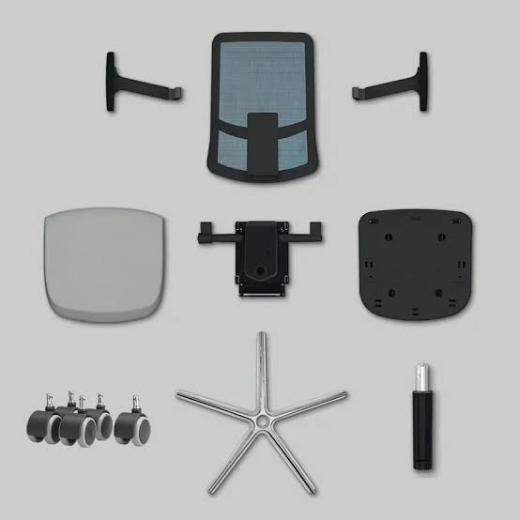
For office furniture manufacturers, understanding chair components from a system perspective is increasingly important. A chair's durability, ergonomics, repairability, and environmental footprint are influenced by the interaction between its seat, backrest, mechanism, gas lift, base, casters, and other components.
At the same time, sustainability is becoming more practical rather than purely marketing-driven. Buyers are increasingly asking whether green furniture parts, low carbon chair parts, and eco manufacturing chair strategies can reduce material consumption, production waste, transportation impact, and end-of-life problems without compromising performance.
1. What Are the Main Chair Parts and What Does Each Component Actually Do?
What are the essential parts of an office chair?
A typical office chair contains several functional systems rather than a single structure.
The seat shell provides the structural foundation for the seat. Above it, cushioning and upholstery determine the immediate contact characteristics. The backrest supports the user's torso, while the headrest can provide additional support during reclined positions.
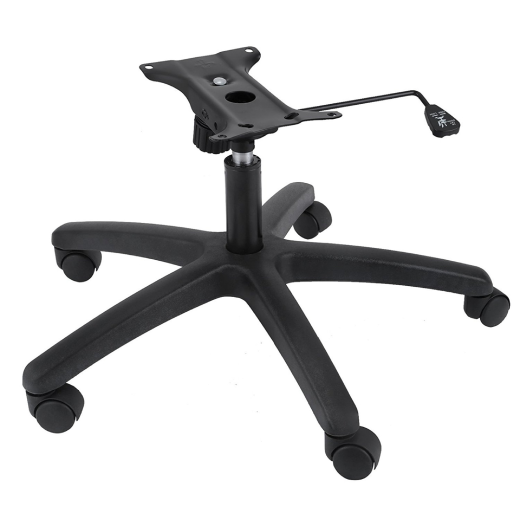
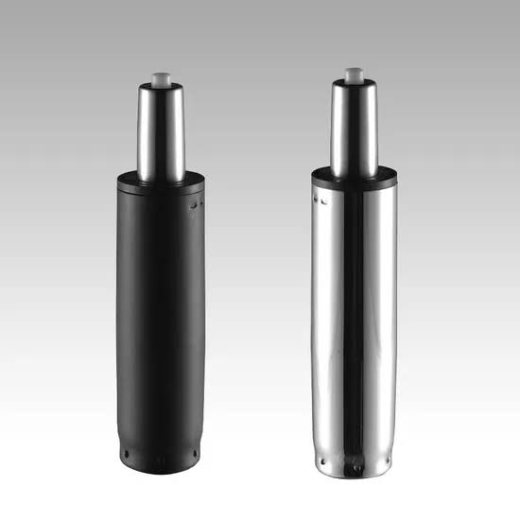
Below the seat, the mechanism plate controls functions such as height-related movement, tilt, recline, and locking. The gas lift cylinder provides vertical adjustment and connects the upper chair assembly with the base.
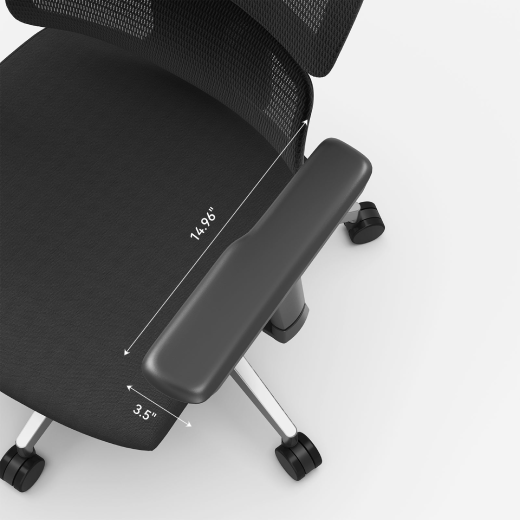
The chair base distributes the load across multiple support points, while casters provide mobility and transfer dynamic loads to the floor. Armrests support the forearms and can influence shoulder and working posture.
This explains why replacing one chair part is not always as simple as finding a component with the same appearance. Dimensions, mounting interfaces, load paths, and movement characteristics must match.
Why does compatibility matter when sourcing replacement chair parts?
A component can look correct but still be mechanically incompatible.
For example, a gas lift must match both the mechanism and base interfaces. A caster needs the correct stem connection and must be appropriate for the intended flooring and load. An armrest requires compatible mounting points and sufficient structural support.
For B2B buyers, a proper chair-parts specification should therefore consider:
dimensions and tolerances;
mounting interfaces;
material;
load requirements;
movement range;
environmental conditions;
assembly method;
expected service life.
The goal is not simply to make the component fit. It needs to function correctly within the complete chair assembly.

2. How Can Green Furniture Parts Reduce the Environmental Impact of Chair Manufacturing?
What makes a chair part environmentally preferable?
A green furniture part should not be defined simply by whether it contains recycled material.
Environmental performance can come from several stages of the product lifecycle: material selection, manufacturing efficiency, transportation, service life, repairability, and end-of-life treatment.
For example, a lightweight component may reduce transportation-related emissions, while a durable component may extend the service life of the entire chair. A replaceable caster or armrest can potentially prevent a chair from being discarded because of one failed component.
This creates an important distinction between material sustainability and system sustainability.
A component made from recycled material is not automatically a sustainable solution if it has poor durability and causes premature replacement. Conversely, a durable component may provide environmental benefits by extending product life even if its material is not marketed as "green."
Are low carbon chair parts always made from recycled materials?
No.
Low carbon chair parts can be achieved through multiple approaches.
Manufacturers can consider lower-impact materials where performance allows, reduce unnecessary material thickness, optimize component geometry, improve production yield, minimize scrap, and reduce transportation weight.
Manufacturing efficiency is particularly important for injection-molded components. Optimizing mold design, cycle efficiency, material utilization, and production consistency can reduce waste without changing the functional design of the part.
The most effective strategy is therefore to evaluate carbon impact across the component's lifecycle rather than focusing on one material characteristic.
Why is durability an important part of sustainable chair design?
A chair that needs frequent replacement can create a larger environmental burden than a durable chair that remains in service for years.
This is why sustainability and engineering quality should not be treated as opposing objectives.
For example, a well-designed chair base should maintain structural integrity under repeated loading. A mechanism should withstand repeated tilting cycles. Casters should remain functional under continuous movement. If these components fail prematurely, the environmental and financial costs extend beyond the individual replacement part.
For manufacturers, green furniture parts should therefore be evaluated through both environmental impact and expected functional life.
3. What Does Eco Manufacturing Mean for Office Chair Parts?
How can eco manufacturing chair strategies reduce production waste?
An eco manufacturing chair approach starts before the finished chair reaches the assembly line.
Component manufacturers can reduce environmental impact through:
optimized material usage;
improved production yield;
reduced defective output;
efficient mold and tooling design;
rationalized component structures;
reduced packaging materials;
better production planning;
longer component service life.
The objective is not to add an "eco" label to an existing manufacturing process. It is to identify where material, energy, time, and transportation are unnecessarily consumed.
Can modular chair parts support more sustainable furniture?
Yes, when modularity is deliberately designed into the product.
If casters, armrests, mechanisms, gas lifts, or other components can be replaced independently, a chair may remain operational even when one part reaches the end of its useful life.
This can support a repair-oriented furniture model instead of a replacement-oriented model.
However, modularity has a trade-off. Additional interfaces can increase component count, assembly requirements, and material usage. The objective should therefore be functional modularity, not simply adding more detachable parts.
FSGROWING's manufacturing structure illustrates the importance of component specialization. Its specialized workshops work together to produce different office chair components, including casters, chair bases, gas lift cylinders, mechanism plates, seat shells, backrests, headrests, armrests, and more. This type of component-focused production can support manufacturers that need to evaluate chair construction at the individual-part level.
Why should B2B buyers ask about manufacturing consistency?
Sustainability is closely connected with production efficiency.
High defect rates mean wasted raw materials, energy, labor, packaging, and transportation. Inconsistent components can also create assembly problems and increase rejection rates further down the supply chain.
For OEM buyers, supplier evaluation should therefore include quality-control processes, dimensional consistency, material control, production capacity, and batch stability—not just the nominal material or unit price.
4. Chair Parts What Are the Biggest Problems for Manufacturers and Buyers?
Which chair parts usually require the most attention during product development?
Structural and movement-related components deserve particular attention, including seat shells, mechanisms, gas lifts, bases, and backrest structures.
These parts influence load transfer and user movement and therefore need to be considered together.
Are low carbon chair parts more expensive?
Not necessarily.
Material optimization, lightweight design, improved production yield, and reduced waste can sometimes lower costs while reducing environmental impact.
However, recycled or specialized materials may increase material costs in some applications. The correct evaluation should consider total lifecycle cost rather than material price alone.
Is recycled plastic automatically a better chair material?
No.
The material must still provide adequate strength, stiffness, dimensional stability, fatigue resistance, and environmental performance for its application.
Using a lower-impact material that significantly reduces service life may not deliver the expected sustainability benefit.
How can manufacturers make office chair parts easier to recycle?
Material simplification can help. Where practical, reducing unnecessary material combinations and designing components for easier separation can improve end-of-life processing.
Clear material identification and modular construction can also support sorting and replacement.
Can replacing one chair part really be considered sustainable?
Potentially, yes.
If replacing a caster, armrest, mechanism, or other component allows the rest of a functional chair to remain in service, it can avoid premature disposal of the complete product.
This is one of the strongest arguments for designing chairs around maintainable components.
What should buyers look for when sourcing green furniture parts?
Look beyond environmental claims. Ask about material composition, durability, production waste, quality consistency, packaging, expected service life, and whether the component can be repaired or replaced.
A credible sustainability strategy should be supported by measurable manufacturing and product information rather than vague "eco-friendly" terminology.
If you are reviewing office chair components for a new product, replacement program, or OEM project, explore the different chair-part categories available from FSGROWING and assess each component according to your chair's structural, functional, and sustainability requirements.
Mesh vs Leather Office Chairs: Pros and Cons
Navigating High Volume Office Seating Components Procurement
Latest Blog