
NEWS
Data is empty
How Does a Tilt Mechanism Work?
Have you ever wondered why an office chair leans back while your dining room chair stays stiff as a board? When you push your weight against the backrest, the chair obediently tilts, and when you let go, it springs back. It’s not rocket science—it’s just those unassuming metal parts tucked under the seat, what we usually call the “tilt mechanism.”
In reality, plenty of people have practical questions when buying or using a chair: What does that knob under the seat actually do when you twist it? Why does one chair feel really stiff—you have to push hard to recline—while another feels so soft it almost tips over? When you press that “lock” button, what angle does it actually lock at? And more confusingly, even though they all recline, chairs from different brands or price points can feel completely different.
1. How Does an Office Chair Tilt Mechanism Work?
What happens when you lean back in an office chair?
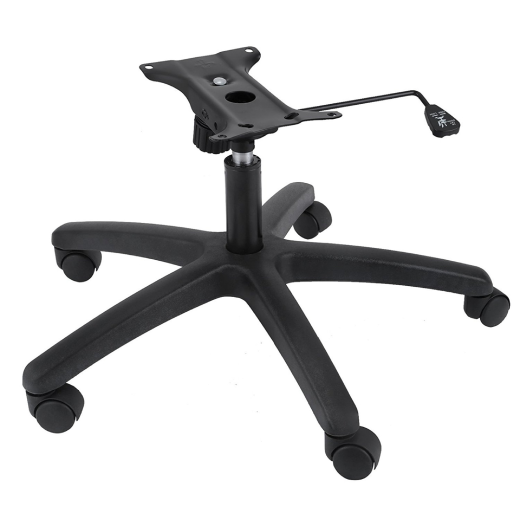
A tilt control mechanism is installed between the seat assembly and the gas lift. When the user leans backward, the mechanism allows the seat, backrest, or both to rotate around a defined pivot point.
The basic process is straightforward:
The user's body applies backward force.
The mechanism rotates around its pivot.
Internal springs provide resistance against the movement.
A stop or locking system controls the available tilt range.
When the user returns forward, the mechanism moves back toward its original position.
The pivot position has a major effect on how the chair feels. In a conventional center-tilt design, the front of the seat may rise noticeably during reclining. A knee-tilt design places the pivot closer to the front of the seat, which can reduce this lifting effect and allow the user's feet to remain more stable on the floor.
This means the mechanism is not simply a "recline switch." Its geometry determines the chair's movement characteristics.
Why do different office chair tilt mechanisms feel so different?
Different mechanisms use different pivot positions and movement ratios. A basic tilt mechanism may move the seat and backrest together, while a synchro mechanism coordinates their movement at different rates.
The result is a different relationship between the user's torso, pelvis, thighs, and feet during recline.
Therefore, when evaluating an office chair mechanism, the important question is not only how far the chair reclines, but also how the seat and backrest move while it reclines.

2. What Are Chair Tilt Lock and Tilt Tension Control?
What does a chair tilt lock actually do?
A chair tilt lock restricts or stops the reclining movement at a defined position. On many office chairs, the mechanism can be locked in the upright position; more advanced mechanisms may provide multiple locking positions or a tilt limiter.
Tilt lock is particularly useful when users need a stable upright position for keyboarding or want to maintain a preferred reclined position.
Importantly, tilt lock and tilt tension are different functions.
Tilt lock controls where the chair stops.
Tilt tension control determines how much force is required to recline.
How does tilt tension control work?
The tilt tension control is commonly connected to a spring or resistance assembly inside the mechanism. Turning the adjustment knob changes the resistance against backward movement.
Higher tension generally makes the chair harder to recline, while lower tension allows easier movement.
The correct setting depends on the user's weight and preferred working posture. Excessive tension can make dynamic movement difficult, while insufficient tension can make the chair feel unstable.
This is why tension should not simply be set to maximum. The objective is controlled, predictable movement rather than maximum resistance.
Why does a chair still feel wrong after adjusting the tension?
Tilt tension cannot solve every reclining problem.
If the pivot geometry is unsuitable, the spring has an inappropriate range, the mechanism is worn, or the seat and backrest are poorly matched, adjusting the tension knob may produce only limited improvement.
For manufacturers, this highlights an important principle: tilt performance is determined by the complete mechanism architecture, not by the tension spring alone.
3. How Should Manufacturers Choose the Right Tilt Control Mechanism?
Is a synchro tilt mechanism always better?
Not necessarily.
A synchro mechanism provides coordinated seat-and-back movement and can offer a more sophisticated dynamic sitting experience. However, it also involves more complex mechanical relationships and may require tighter control of components and assembly.
A simpler tilt mechanism may be more appropriate for cost-sensitive task chairs or applications where extensive adjustment is unnecessary.
The correct choice depends on:
intended chair application;
target user group;
required recline range;
adjustment functions;
expected usage frequency;
load requirements;
manufacturing cost;
compatibility with the seat and backrest.
The most complicated mechanism is not automatically the best mechanism.
What should B2B buyers check before sourcing an office chair mechanism?
Visual similarity is not enough.
Buyers should verify the mounting-hole pattern, gas-lift interface, pivot geometry, seat angle, backrest connection, load capacity, tilt range, locking positions, and tension-adjustment range.
A mechanism may physically fit under a seat but still produce the wrong movement or place excessive stress on connected components.
This is particularly important for replacement parts. A "universal" mechanism should never be assumed to be universally compatible without checking its interfaces and specifications.
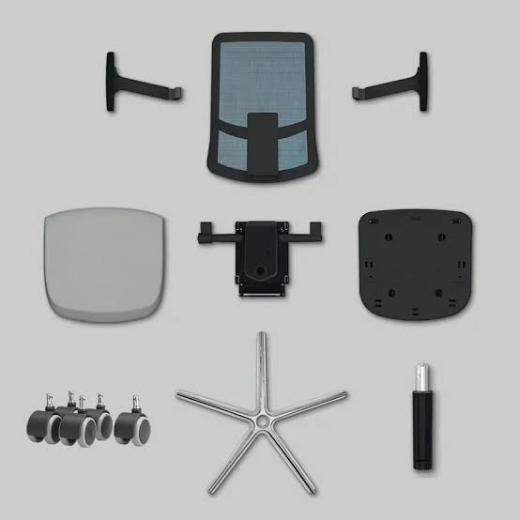
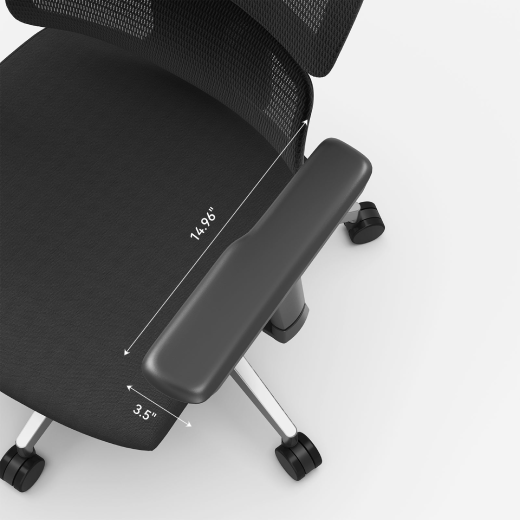
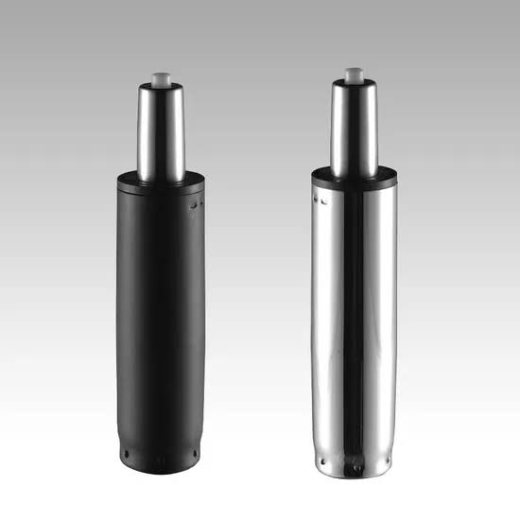
FSGROWING's manufacturing structure reflects this component-system approach. Its specialized workshops work together to produce different office chair components, including casters, chair bases, gas lift cylinders, mechanism plates, seat shells, backrests, headrests, armrests, and more. Looking at these components as a connected system can help manufacturers evaluate compatibility rather than selecting a mechanism in isolation.
4. Common Tilt Mechanism Problems: What Should Buyers and Manufacturers Watch For?
Why does an office chair fail to stay locked?
A locking problem can result from incomplete engagement, wear, excessive clearance, damaged internal components, or incompatibility between the mechanism and its load conditions.
If the chair moves after the chair tilt lock is engaged, simply tightening the external knob may not solve the underlying mechanical problem.
Why is the chair difficult to recline?
If the tilt tension control is already adjusted toward lower resistance but the chair remains difficult to recline, possible causes include excessive spring preload, unsuitable mechanism geometry, friction, or component wear.
The mechanism should be evaluated as a complete assembly rather than assuming the tension knob is the only variable.
Can I replace one tilt mechanism with another model?
Only after checking compatibility.
Mounting dimensions, gas-lift connection, seat structure, pivot position, backrest interface, and load requirements all matter. A replacement mechanism that fits the screw holes may still change the chair's recline behavior or create structural problems.
What information should an OEM buyer provide when requesting a tilt mechanism?
A useful specification should include the chair type, seat dimensions, mounting pattern, gas-lift specification, backrest structure, required tilt angle, locking requirements, tension-control requirements, expected load, and intended application.
Providing these details at the beginning can significantly reduce sample revisions and compatibility issues.
So, how does a tilt mechanism work? It converts the user's backward movement into controlled mechanical rotation while managing pivot geometry, resistance, recline range, and locking.
The tilt control mechanism determines how the chair moves. The chair tilt lock controls whether that movement can continue. The tilt tension control determines how much resistance the user feels.
For B2B chair manufacturers, understanding these relationships is more valuable than evaluating a mechanism by appearance or by the number of advertised functions. The mechanism must work together with the seat shell, backrest, gas lift, and chair base to deliver predictable movement and long-term reliability.
For more information about office chair mechanisms and related components, you can review FSGROWING's office chair mechanism solutions and compare the available component configurations with your chair design requirements.
Nylon vs Metal Chair Base: Which Material Is Better for Office Chairs?
Ergonomic Chair Parts List: Guide to Ergonomic Office Chair Components and Seat Design
Latest Blog