
NEWS
Data is empty
Nylon vs Metal Chair Base: Which Material Is Better for Office Chairs?
When comparing office chair bases, the choice often comes down to nylon vs metal chair base. Metal is usually associated with strength and premium construction, while reinforced nylon is often selected for its lower weight, corrosion resistance, and manufacturing flexibility.
But which one is actually the best chair base?
The answer depends on more than material. Base geometry, reinforcement, gas-lift compatibility, caster position, expected load, usage frequency, and manufacturing quality can all influence stability and service life. A well-designed nylon base can outperform a poorly designed metal base, while metal may be the better choice for demanding commercial applications.
1. Nylon vs Metal Chair Base: What Is the Real Difference?
Is a nylon chair base really weaker than a metal chair base?
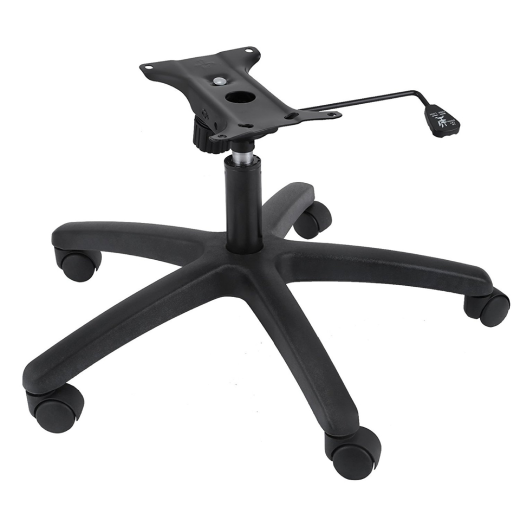
The simple comparison of "plastic versus metal" is misleading. Modern office-chair nylon bases are often made from glass-fiber-reinforced nylon rather than ordinary plastic. The reinforcement improves stiffness, strength, and dimensional stability.
Nylon also has useful characteristics that metal does not. It is relatively lightweight, does not rust, and can absorb some impact through controlled deformation.
Metal bases, particularly aluminum and steel, provide higher structural rigidity. Aluminum is commonly used where manufacturers want a combination of rigidity, appearance, and relatively moderate weight, while steel is typically selected when maximum structural strength and heavy-duty performance are priorities.
Therefore, the better chair base comparison is not simply "Which material is stronger?" It should ask:
What load will the chair carry?
How frequently will it be used?
What type of floor will it operate on?
How important is weight?
What level of rigidity is required?
How will the base connect to the gas lift and casters?
These factors determine whether nylon or metal makes more sense.
Why does glass-fiber reinforcement matter in a nylon chair base?
Glass fiber changes the mechanical behavior of nylon by increasing stiffness and strength compared with unreinforced polymer.
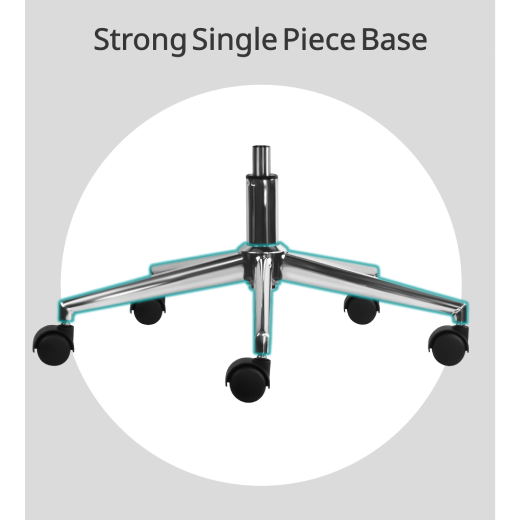
This is particularly important around the center hub and the five legs, where the base experiences both vertical and lateral forces. When a user sits down, moves sideways, reclines, or pushes away from a desk, the base does not experience a perfectly vertical load.
For this reason, the material specification alone is insufficient. The reinforcement ratio, molding quality, geometry, and central connection all affect the finished component.
2. Which Chair Base Provides Better Stability and Durability?
Is a metal chair base always more durable?
Not automatically.
Metal has an obvious advantage in rigidity, but durability depends on design and manufacturing quality. An aluminum base with poor geometry or an inadequate gas-lift interface can still develop instability.
The central hub deserves particular attention. It transfers the load from the gas lift into the five-star structure. If the interface becomes loose or deformed, the chair may develop wobbling even when the five legs themselves remain intact.
Nylon bases face a different consideration: long-term deformation under sustained loads and environmental conditions. Proper material selection and reinforcement are therefore important for applications involving heavy users or extended daily operation.
Why does the shape of the chair base matter as much as the material?
A five-star base is designed to distribute the chair's load and provide a broad support footprint. The distance between the central hub and caster positions affects the chair's resistance to tipping.
This means a chair base comparison should include geometry, not just material.
A wide, properly engineered nylon base can provide excellent stability, while a narrow metal base may offer less resistance to certain tipping forces. Caster placement also changes the effective support area.
The connection between the base and casters matters as well. A high strength base paired with unsuitable casters may still produce poor mobility or excessive floor friction.
Which base is better for heavy duty office chairs?
For heavy-duty or high traffic environments, metal is often considered because of its rigidity and load-bearing characteristics. Steel can be appropriate when structural strength and high durability are priorities. Aluminum can provide a useful balance between rigidity and weight.
However, reinforced nylon should not automatically be excluded. Properly engineered nylon bases can be suitable for many commercial and ergonomic chairs, particularly where weight reduction, corrosion resistance, and manufacturing efficiency are important.
The correct decision should therefore be based on the chair's actual load specification and testing requirements rather than the material's reputation alone.
3. How Should Buyers Choose the Best Chair Base for Different Applications?
Is nylon or metal better for a home office chair?
For typical home-office applications, reinforced nylon can offer a practical combination of strength, low weight, corrosion resistance, and cost efficiency.
A lighter base also makes the chair easier to reposition. This can be useful in home offices where users frequently move furniture or operate on different floor surfaces.
Metal may be preferable when the chair is intended to have a premium appearance, greater rigidity, or a heavier-duty construction.
When is an aluminum chair base a better choice?
Aluminum is particularly attractive when manufacturers need structural rigidity while avoiding the greater mass associated with steel.
It also provides a premium visual appearance that is frequently used in higher-end office furniture.
However, aluminum generally costs more than basic reinforced nylon and may require different manufacturing and finishing processes. For large-volume production, the additional material and processing cost needs to be considered against the product's target market.
What should OEM buyers check before ordering a chair base?
A professional specification should include more than the material name.
Buyers should confirm:
Material and reinforcement: Determine whether the nylon is reinforced and identify the required material grade.
Overall dimensions: The diameter and leg geometry influence stability and compatibility.
Gas lift interface: The central socket must match the selected cylinder.
Caster connection: Stem dimensions and connection type must correspond with the casters.
Load requirements: The base should be appropriate for the intended chair load and application.
Surface finish: Metal bases may require polishing, coating, plating, or other treatments depending on the product design.
Testing requirements: For commercial seating, durability and stability testing should be considered during component selection.
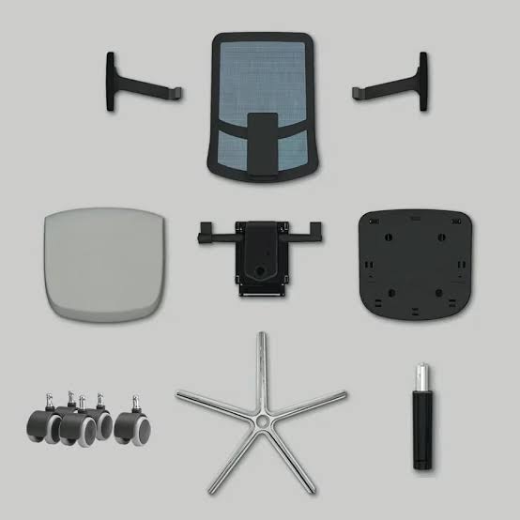
FSGROWING takes a broader component approach, with specialized workshops working together to produce different office chair components, including casters, chair bases, gas lift cylinders, mechanism plates, seat shells, backrests, headrests, armrests, and more. This type of coordinated production is useful when multiple chair components need to work together rather than being sourced as completely independent parts.
4. Nylon vs Metal Chair Base FAQ: What Problems Should Buyers Consider?
Why does my nylon chair base wobble after prolonged use?
Possible causes include material deformation, an unsuitable load specification, a loose gas-lift interface, caster connection problems, or excessive clearance in the central hub.
The first step should be identifying whether the movement originates from the base itself or from the cylinder-to-base connection.
Can a nylon chair base support a heavy office chair?
Yes, if it is specifically engineered and rated for the required load. Reinforced nylon is substantially different from ordinary injection-molded plastic.
However, buyers should verify the manufacturer's specifications rather than assuming that every nylon base has the same structural capacity.
Why choose nylon instead of aluminum for an office chair base?
Nylon can reduce component weight, provide corrosion resistance, simplify certain manufacturing processes, and offer a cost-effective solution for many office-chair applications.
It can be particularly attractive when the chair does not require the extreme rigidity or premium appearance associated with metal.
Why choose metal instead of nylon?
Metal can provide greater rigidity and is often preferred for heavy-duty, premium, or high-traffic seating. Steel offers particularly strong structural performance, while aluminum provides a lighter alternative with a premium appearance.
What is the best chair base for an ergonomic office chair?
There is no universal best chair base.
For a standard ergonomic chair, reinforced nylon may provide an effective balance of stability, weight, and cost. For heavy-duty commercial seating, aluminum or steel may be more appropriate.
The best choice is the base whose material, geometry, interfaces, and load performance match the complete chair design.
If you are developing or sourcing office chair components, reviewing complete chair-base specifications alongside related components can make the selection process more accurate. FSGROWING's office chair base range provides one starting point for evaluating different base configurations according to your chair's structural and application requirements.
Navigating High Volume Office Seating Components Procurement
How Does a Tilt Mechanism Work?
Latest Blog