
NEWS
Data is empty
Private Label Chair Parts Business
Starting a private label chair parts business can appear straightforward: select existing components, add a logo, and sell them under your own brand. In practice, successful private label programs require much more than branding.
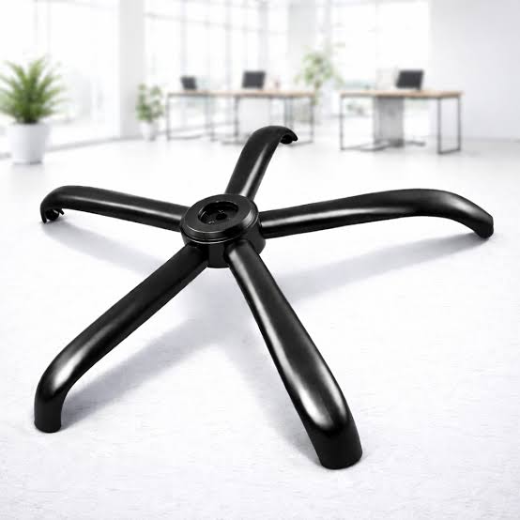
OEM branding furniture chair components have different technical requirements. A caster must handle rolling loads, a gas lift must provide reliable height adjustment, a mechanism must withstand repeated movement, and a chair base must maintain structural stability. At the same time, visible components such as armrests, backrests, and seat shells influence the product's appearance and brand identity.
For furniture brands, distributors, and chair manufacturers, the real challenge is creating a private label component program that balances customization, engineering performance, MOQ, cost, consistency, and long term supply.
1. What Does a Private Label Chair Parts Business Actually Involve?
Is private label chair parts the same as putting a logo on standard components?
Not necessarily.
Basic private labeling may involve applying a logo, changing packaging, or selecting a specific color from an existing component range. A more advanced program can involve modified dimensions, materials, finishes, molds, packaging, or even components developed from a buyer's drawings.
This creates an important distinction between branding chair parts and true OEM development.
Branding changes how a component is presented. OEM development changes how the component is designed or manufactured.
For example, a buyer may use an existing chair base but customize its finish and packaging. Another buyer may require a completely different base geometry to match a proprietary chair structure.
The second project requires engineering validation rather than simple branding.
What chair parts are most suitable for private label branding?
Not every component needs the same level of customization.
Visible components are often more relevant to brand differentiation, including:
Armrests
Backrests
Headrests
Seat shells
Chair bases
Mechanism controls
Caster covers
Functional components such as gas lift cylinders and mechanisms may be less visually prominent, but they can have a much greater impact on reliability.
This means a private-label program should distinguish between brand-facing components and performance-critical components rather than treating every part identically.

2. What Are the Biggest Challenges in OEM Branding Furniture Components?
How can furniture brands customize chair parts without creating excessive tooling costs?
Tooling is one of the most important economic considerations in OEM development.
If an existing component already meets the required dimensions and performance, customization may only require changes to color, finish, logo application, or packaging.
However, a proprietary geometry can require new tooling. The investment may make sense when expected order volume is high enough to distribute the tooling cost across multiple production runs.
This is why experienced buyers should calculate total lifecycle cost rather than simply comparing the unit price.
A component that is slightly more expensive per unit but requires no new mold may be economically preferable to a cheaper-looking custom design with substantial tooling investment.
Should a buyer choose OEM or ODM for a private label chair parts program?
The distinction is important.
With OEM, the buyer generally starts with a defined specification, drawing, sample, or existing product concept. The manufacturer produces the OEM branding furniture component according to those requirements.
With ODM, the manufacturer contributes more of the existing design platform, engineering knowledge, or product development.
For a new furniture brand without its own engineering resources, ODM can reduce development complexity. For an established brand with proprietary specifications, OEM provides greater control over the final component.
The correct choice depends on design ownership, customization depth, development capability, volume, and time-to-market.
Why is component compatibility a bigger problem than branding?
A branded component can look correct but still fail during chair assembly.
For example, changing a seat shell may affect the mounting pattern of the mechanism. A different backrest may require another connection structure. Changing the chair base can affect gas lift compatibility and overall stability.
This is why OEM branding furniture should be approached as a system-engineering problem.
A component supplier needs to understand not only the individual part but also how it interacts with adjacent components.
FSGROWING's manufacturing structure reflects this system perspective. Specialized workshops work together to produce different office chair components, including casters, chair bases, gas lift cylinders, mechanism plates, seat shells, backrests, headrests, armrests, and more.
The value of this approach is not simply having many products. It is the ability to consider component relationships when developing a chair platform.
3. How Can Buyers Control Quality, MOQ, and Supply Chain Risk?
Why is MOQ not the only number private-label buyers should evaluate?
Minimum order quantity is important, but it does not tell the whole story.
A low MOQ may make product testing easier, but a supplier with inconsistent production between small and large batches can create serious problems when demand increases.
Private-label buyers should therefore evaluate:
Sample-to-production consistency
Material specifications
Dimensional tolerances
Color and finish consistency
Packaging requirements
Replacement-part availability
Production capacity
Quality inspection procedures
The key question is not simply “What is your MOQ?”
It is:
“Can the same component specification be reproduced consistently when my order volume increases?”
Why is sample approval critical for branding chair parts?
A photograph or CAD drawing cannot reveal every production issue.
A physical sample allows buyers to check dimensions, assembly fit, surface finish, logo positioning, packaging, and interaction with other chair components.
For custom chair parts, the approved sample should become a controlled reference for mass production.
This reduces the risk of receiving a component that technically matches the drawing but differs in finish, fit, or appearance from what the buyer expected.
How should private-label businesses plan replacement parts?
This is an overlooked commercial issue.
A furniture brand may sell a chair for several years, but individual components can experience different wear rates. Casters, gas lifts, mechanisms, and armrests may require replacement before the complete chair reaches the end of its service life.
If replacement components are unavailable, the brand may face unnecessary warranty costs and customer dissatisfaction.
Therefore, a private-label strategy should consider after-sales component continuity from the beginning.
The best supplier relationship is not simply one that delivers the initial order. It should also support repeat production and replacement requirements using consistent specifications.
4. What Makes a Private Label Chair Parts Business Sustainable?
Should private label buyers focus on the cheapest chair components?
Usually, no.
The cheapest component can become expensive if it creates assembly problems, warranty claims, inconsistent batches, or premature product failures.
A better approach is to establish a target specification based on the intended chair application.
For example, a premium ergonomic chair may require different mechanisms, armrests, gas lifts, and bases than a basic task chair.
The component specification should therefore follow the positioning and performance requirements of the final chair, not simply the lowest available quotation.
How can a furniture brand create real differentiation through chair components?
Brand differentiation does not always require designing every component from scratch.
A more practical strategy can combine:
Standardized functional components + customized visible components + consistent branding + controlled packaging.
For example, a brand may use a proven mechanism and gas lift platform while differentiating its product through a proprietary backrest, armrest design, chair base finish, color scheme, and packaging.
This can reduce development risk while still creating a recognizable product identity.
What should a buyer look for in a long-term private label chair parts supplier?
The most useful supplier is not necessarily the one with the largest catalog.
Look for evidence of:
Engineering and customization capability
Stable component specifications
Cross-component compatibility
Sample development
Quality control
Production scalability
Consistent documentation
Replacement-part support
Clear ownership of molds and specifications
For FSGROWING, the ability to coordinate specialized workshops across casters, bases, gas lifts, mechanisms, seat shells, backrests, headrests, and armrests provides a broader component-development foundation for different office chair configurations.
FAQ: Private Label Chair Parts Business
What is the difference between private-label and OEM chair parts?
Private labeling can involve selling existing components under a buyer's brand, while OEM branding furniture usually involves manufacturing according to the buyer's specific drawings, samples, or specifications. The actual scope depends on the supplier agreement.
Can chair parts be customized with a company logo?
Yes, depending on the component. Logos can potentially be applied through printing, molding, laser marking, packaging, or other methods. The appropriate method depends on the material, surface, production volume, and design.
Is private label chair parts suitable for small furniture brands?
It can be. Using existing components with limited customization can reduce development complexity. Fully customized components may require additional tooling and engineering investment, making them more suitable for higher volume programs.
What is the biggest risk in a private-label chair parts business?
A major risk is treating branding separately from engineering. A component may look correct but fail to fit the chair structure, meet the required load conditions, or remain consistent during mass production.
Should furniture brands use the same supplier for multiple chair components?
Not always, but consolidating compatible components with a capable supplier can simplify specification management, quality control, and supply coordination. The decision should be based on technical capability rather than supplier count alone.
How can private-label buyers reduce OEM development risk?
Start with a clear specification, physical sample approval, compatibility testing, documented quality requirements, and a defined production reference sample. This OEM branding furniture creates a controlled transition from development to mass production.
Build a More Reliable Private Label Chair Parts Program
A successful private label chair parts business is ultimately about more than adding a brand name to existing products. The strongest programs connect branding with engineering, component compatibility, quality consistency, and long-term supply planning.
Whether the project involves a few branded components or a broader OEM branding furniture program, buyers should evaluate the entire component system before committing to production.
For manufacturers and furniture brands exploring different chair configurations, understanding how casters, bases, gas lifts, mechanisms, seat shells, backrests, headrests, and armrests work together can provide a stronger foundation for product development and future product-line expansion.
Mesh vs Leather Office Chairs: Pros and Cons
Latest Blog