
NEWS
Data is empty
Will Mesh Chair Help Back Pain?
Back pain has become one of the most common complaints among office workers, remote professionals, and anyone who spends long hours seated at a desk. As search interest grows around the question “Will a mesh chair help back pain?”, it is clear that users are not just looking for product recommendations—they want credible, experience-based answers grounded in ergonomics and real world use.
Chapter 1: Why Sitting Causes Back Pain—and What Ergonomic Chairs Are Designed to Solve
1.1 The Biomechanics of Sitting and Spinal Stress
Contrary to popular belief, sitting is not a “resting” posture for the spine. When seated for long periods, especially without adequate support, the lumbar spine experiences increased disc pressure compared to standing. Over time, this can lead to muscle fatigue, ligament strain, and chronic discomfort.
The most common sitting-related back pain triggers include:
Loss of natural lumbar curvature due to slouching
Continuous muscle activation to maintain posture
Static positioning that reduces circulation
Poor weight distribution across the pelvis and lower back
An ergonomic chair is designed to counteract these factors by supporting the spine's natural shape, allowing micro movement, and reducing the muscular effort required to sit upright.
1.2 What “Ergonomic” Actually Means in Office Seating
From an ergonomic standpoint, a chair should adapt to the user—not the other way around. Key objectives include:
Maintaining neutral spinal alignment
Supporting the lumbar region consistently
Allowing posture changes without loss of support
Reducing pressure concentration on any single area
A chair that fails to meet these criteria—regardless of how soft or expensive it is—will not effectively address back pain.
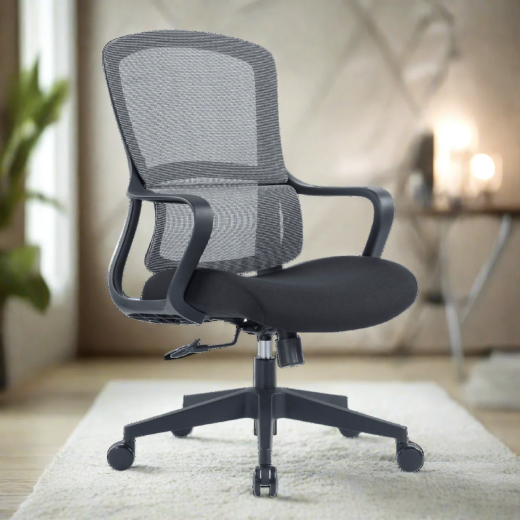
Chapter 2: What Is a Mesh Back Chair and How Does It Support the Spine?
2.1 Defining a Mesh Back Chair
A mesh back chair uses a tightly tensioned mesh fabric stretched over a supportive frame, typically replacing traditional foam or upholstered backrests. In many designs, the seat may also be mesh, especially in full mesh or mesh operator chairs intended for extended daily use.
Unlike padded surfaces that compress over time, mesh relies on tension and elasticity to support the body.
2.2 How Mesh Back Technology Works in Practice
Mesh backrests provide support through three core mechanisms:
Adaptive Contouring
The mesh conforms to the user's back shape, maintaining continuous contact across the spine rather than pushing at isolated points.
Even Load Distribution
Weight is spread across a wider surface area, which can reduce localized pressure on the lumbar spine and surrounding muscles.
Dynamic Flexibility
Mesh allows subtle movement as the user shifts posture, encouraging natural micro-adjustments instead of rigid static sitting.
These characteristics explain why mesh back desk chairs are frequently chosen for long workdays and shared office environments.
2.3 Mesh Back Desk Chairs vs. Mesh Operator Chairs
While the terms are sometimes used interchangeably, there are functional differences:
Mesh back desk chair: Typically designed for standard office or home desk use, with essential ergonomic adjustments.
Mesh operator chair: Built for longer daily use, often featuring enhanced lumbar systems, wider adjustment ranges, and more durable mesh structures.
Both can support back health if designed and configured correctly.
Chapter 3: Do Mesh Chairs Actually Help Back Pain? Benefits, Limits, and Misconceptions
3.1 How a Mesh Back Chair Can Reduce Back Discomfort
A properly designed mesh chair can support back health in several ways:
Consistent Lumbar Contact
When combined with a well-positioned lumbar support system, a mesh back chair helps maintain the spine's natural inward curve, reducing strain on discs and ligaments.
Improved Thermal Comfort
Breathability minimizes heat and moisture buildup, which reduces restlessness and encourages users to maintain correct posture longer.
Reduced Pressure Points
The flexible mesh surface distributes force more evenly than hard plastics or over-compressed foam, helping prevent pain hotspots in the lower back and hips.
Encouragement of Movement
Mesh backrests flex slightly with the user, supporting movement rather than resisting it—an important factor in reducing muscle fatigue during prolonged sitting.
3.2 Why Some Mesh Chairs Fail to Help Back Pain
Not all mesh chairs deliver these benefits. Common shortcomings include:
Low tension mesh that sags over time
Fixed or poorly positioned lumbar support
Limited adjustability for different body types
Over minimalist designs that sacrifice support for appearance
In such cases, a mesh chair may feel comfortable initially but fail to provide meaningful spinal support over the long term.
3.3 Mesh Is a Tool, Not a Medical Solution
It is important to set realistic expectations. A mesh back chair can support better posture and comfort, but it cannot:
Cure chronic spinal conditions
Replace physical activity or movement breaks
Compensate for poor desk height or monitor positioning
Back pain relief is most effective when ergonomic seating is combined with proper workstation setup and regular movement.
Chapter 4: How to Choose and Use a Mesh Back Chair for Real Back Support
4.1 Key Features That Matter More Than Brand Names
When evaluating a mesh back desk chair or mesh operator chair, focus on function rather than marketing language:
Adjustable lumbar support (height and depth)
Stable, high-tension mesh material
Seat depth that supports thighs without knee pressure
Tilt and recline mechanisms that allow posture variation
Armrests that support relaxed shoulder positioning
Some manufacturers, such as those producing full mesh ergonomic office chairs with adjustable lumbar systems (including designs similar to those offered by FSGROWING), focus on balancing breathability with structured spinal support rather than purely aesthetic minimalism.
4.2 Proper Setup: Where Many Users Go Wrong
Even the best mesh back chair will fail if poorly adjusted. Key setup principles include:
Feet flat on the floor, knees near hip level
Lumbar support aligned with the natural curve of the lower back
Backrest reclined slightly rather than locked upright
Elbows close to the body with forearms supported
These adjustments reduce spinal loading and allow the mesh backrest to function as intended.
4.3 Long Term Use and Durability Considerations
High quality mesh maintains elasticity over years of use, while inferior materials lose tension and compromise support. For users sitting more than 6–8 hours daily, durability is as important as initial comfort.
FAQ: Mesh Back Chairs and Back Pain
Q1: Are mesh back chairs good for lower back pain?
Yes, when they provide proper lumbar support and sufficient adjustability, mesh back chairs can help maintain spinal alignment and reduce lower back strain.
Q2: Is a mesh operator chair better for long hours?
In most cases, yes. Mesh operator chairs are designed for extended sitting and typically offer more robust ergonomic features than basic desk chairs.
Q3: Can a mesh back desk chair replace a high-end ergonomic chair?
A well-designed mesh chair can deliver many ergonomic benefits, but advanced ergonomic chairs may offer more precise adjustments for users with specific needs.
Q4: Does mesh lose support over time?
Quality mesh retains tension for years. Low-grade mesh may sag, reducing back support and comfort.
Q5: How long should I sit in a mesh chair without breaks?
Regardless of chair type, regular breaks are essential. Standing or walking briefly every 45–60 minutes significantly improves back health outcomes.
Will a Mesh Chair Help Back Pain?
A mesh back chair, mesh back desk chair, or mesh operator chair can play a meaningful role in reducing sitting-related back discomfort—but only when ergonomic principles are properly applied. Mesh excels at breathability, adaptive support, and pressure distribution, making it a strong option for modern work environments.
Which Is Better, Mesh or Fabric?
How To Use Tilt Lock?
Latest Blog